Posted on

My October Garden

Although grasshoppers and two hurricanes invaded, my October garden survives.  Well, there are things growing in it anyway.

After the grasshoppers, helped by escaped chickens, mauled my plants, and a hurricane and various rainstorms flooded them, I pulled out two separate plantings of fall broccoli, collards, and cabbage and officially gave up for the time being in late September.

Instead of putting out more transplants and battling the effects of nature, I formed beds and put in cover crops (I’ll share more about the bed-forming process later).

Beds of rape (canola)

The beds, and the cover crops, helped hold the soil in place during Hurricane Michael.  I will cover them with tarps to kill them to speed decomposition into my soil later.

In a protected environment, safe from grasshoppers and hurricanes, I started a new round of seedlings.  Pictured above are flowers, broccoli, and beets.

Two hurricanes are surely enough for one fall, and the weather is finally turning cooler, so I planted a carrot bed this week.  I also soaked and planted some spinach seeds.  Now my challenge will be keeping the cats from using this luscious, freshly dug area as a bathroom when they need a break from their grasshopper-hunting.

Carrot bed 

Posted on

My spring garden 2017

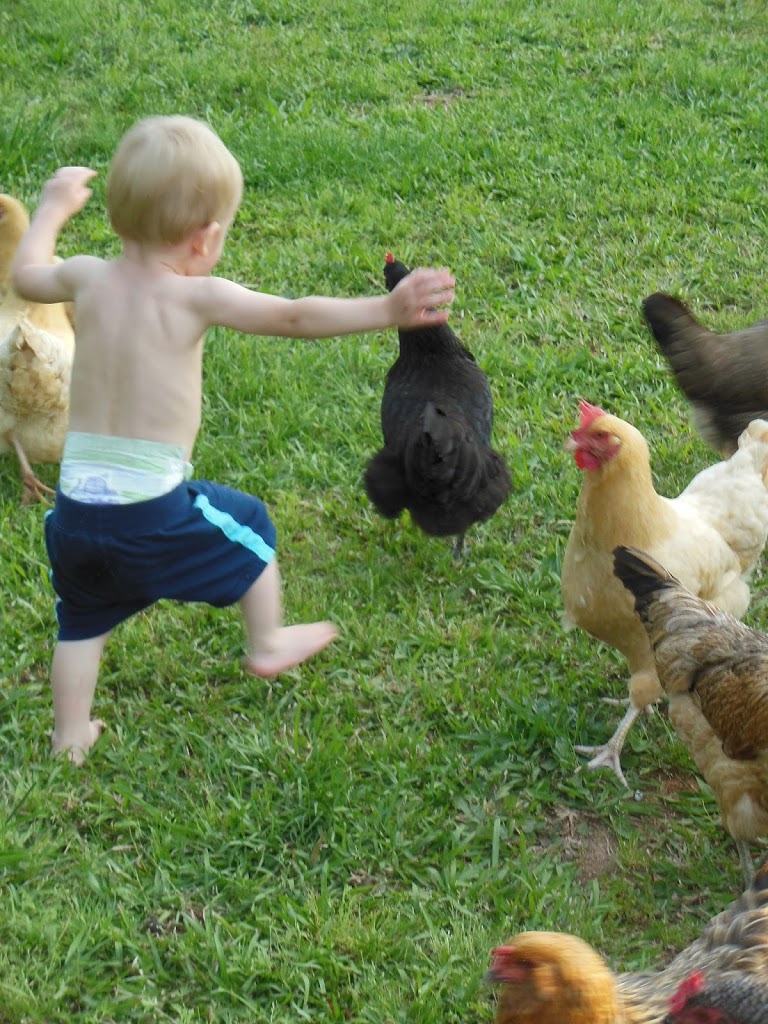
I haven’t posted anything in over two years thanks to the arrival of this sweet boy.  I could either spend my newly limited time and energy actually gardening, or writing about gardening, and I chose to enjoy the outdoors as much as possible.  After he learned to walk, spending time outside is his favorite activity.  He loves the chickens, and they, well, tolerate him I guess.

He is fascinated by their eyes and wants to poke at their eyes in the same way he enjoys poking at the eyes of people.

He does sample the dirt when he goes outside.  He will eventually decide that dirt is inedible, and will gain many immune-system-strengthening microbes in the process.  At least that’s what I tell myself, because it’s impossible to keep him from eating the dirt.  As long as we keep him out of the fire ants, the electric fence, and don’t let him eat chicken poo, I consider our outside time a success.

I’ve also had to have several serious conversations with my older girls, when I tell them to supervise him, about Why We Can’t Leave the Baby Outside Alone Even Though He Doesn’t Mind Being Left Alone.  I think they understand!

Here is an overview of the entire garden.  We haven’t had a frost here in about three weeks, and spring is fully committed to remaining.


Below is one of my asparagus patches, with crimson clover blooming red and blackberries blooming white along the fence.


Baby bean plants that have survived trampling by the toddler have four sets of leaves.

Several rows of garlic are happy in their mulch.  I was self-sufficient in garlic for many years, but last year my garlic rotted and I had to buy new seed garlic.  To the right, above the clover, are leeks.

I’m doing an experiment with cover crops this year.  This is the site of my tomato patch for the summer.  My plan is for the crimson clover and rye grass to die in the heat of summer and to provide a mulch for the tomatoes.  In past years I have spread hay as mulch, which is a time-consuming process, especially in the scale on which I grow tomatoes.  I let the chickens into the clover last week and they have helped trample it.

To the right are English peas, and to the left rear are Fava beans.  Cilantro flowers in front.

More beautiful asparagus below the peas.

Below is a closeup of the Fava beans.  I planted the seeds last fall.

These are thornless blackberry plants.  I was afraid the frost killed the buds, but they are blooming and even forming baby blackberries.  Perhaps the harvest will be as abundant as it was the summer I was pregnant with Luke and I canned 30 pints, or maybe even more, of blackberry jam.

Here is another experiment.  I planted Austrian winter peas in this bed.  Between the rows of peas, I cleared a furrow and sowed Crowder pea and lima bean seeds.  I plan for the beans and peas to grow and for the Austrian winter peas to die back as mulch in the heat of summer.


Posted on 3 Comments

Plans for the New Year in the Garden

I have all the usual New Year’s Resolutions many people have, which I will not share here in case I do not achieve them, but I will share my
plans for the garden.  Gardening resolutions have to take the form of plans, not resolutions, because there are so many factors beyond the gardener’s control that may prevent their accomplishment, factors besides, “Well, that cake looked so tasty I just had to eat it.”   Planning the garden in the winter is a
wonderful occupation, because the hot days and hard work are a long way off.  My plans are usually too ambitious, but I enjoy planning most when it includes some dreams.
This year, I have a large area that pine trees covered until we had them cut in September.  I sowed it to rye grass and clover, and I will move the chickens onto the grass, let them eat the cover crop and fertilize the area. The trees grew in clay, and the soil will need some work before it is ready for my orchard.  I plan to till in the cover crops the chickens leave behind to give the soil organic matter.  I do not know when I will get the apple, pear, cherry, and peach trees planted, but I will work towards the eventual orchard this year.  An orchard is an investment in time and money, and I want to make sure the soil is ready, and I
want to make sure I choose the best varieties of trees for my area.
I have read about grafting non-disease resistant heirloom tomatoes onto disease-resistant rootstock. For example, I could graft San Marzano tomatoes, which I want to grow to make sauce out of, but which die quickly in the garden, onto the lower stem and roots of the Celebrity tomato, which resists disease, and get the disease resistance of the Celebrity and the fruit of the San Marzano.  I saw grafted plants for sale in a gardening magazine for $7 each, and they will become expensive if I buy many.  I will spend the winter reading about grafting tomatoes, and will experiment with them.  I did achieve one of my perennial gardening
goals last summer: I grew enough tomatoes to can to last me through the winter.  Every year is different, though, so I am always looking for ways to outsmart pests and disease. 
I want to grow enough Irish potatoes, onions, garlic, and sweet potatoes so I do not have to buy any. The onions and garlic are in the ground now, and I will have to plant the Irish potatoes later this winter, and the sweet potatoes in the spring.  I have grown more than enough garlic for us for several years, and I will keep trying to accomplish the other goals.
What are your gardening plans?  If you have never gardened, it is a great time to begin one.  Do all the heavy digging and soil preparation now, when it is cold, and when warm weather comes you can leisurely plant your garden.  And, working in the garden will complement your resolutions to lose weight and
exercise more, while you’re having more fun than you would on a treadmill at the gym.  Next time I’ll write about my favorite seed catalogs and plant resources, and you can order some catalogs or look at some websites and plan your garden this winter.